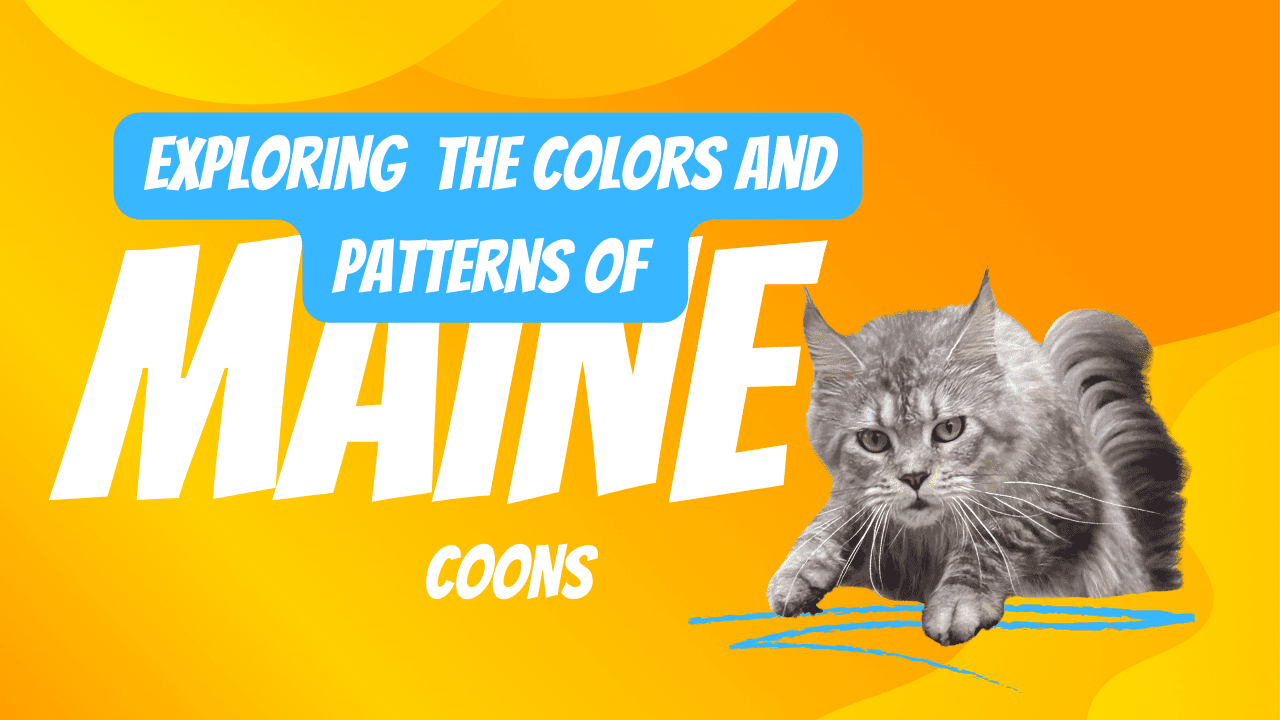

The range of Maine Coon colors and patterns is remarkable. The Cat Fanciers’ Association (CFA) and The International Cat Association (TICA) accept Maine Coon cats in almost every color and pattern. TICA accepts all colors in its traditional category, which leaves out pointed cats. CFA also excludes chocolate, lavender, and ticked tabby.
Every Maine Coon color starts from a few base colors: black, blue, red, and cream. Black and red are the two pigments. Blue is diluted black, and cream is diluted red. Tabby or solid, silver or not, and white spotting or no white are layered on top of that base color.
Here are some examples
Maine Coon cat colors
- Red (also known as orange or ginger)
- Black (in a tabby, black is called brown)
- Blue (a diluted form of black)
- Cream (a diluted form of red)
- White (dominant white, which hides every other color)
- Tortoiseshell (a mix of black and red patches)
- Blue cream (a mix of blue and cream patches)
- Smoke (a solid-colored cat whose hairs are white or silver at the roots and colored for most of their length)
- Silver (a silver tabby: dark tabby markings on a pale silver ground)
- Shaded and shell (silver cats whose hairs are colored only at the tips – about the top third in a shaded cat, and only the very tip in a shell)
- Calico (a tortoiseshell with white patches)
Maine Coon cat patterns
- Tabby (classic, mackerel, and ticked, plus spotted; CFA does not accept ticked)
- Solid (one color without tabby markings)
- Particolor (tortoiseshell and blue cream – two colors in patches)
- Bicolor and “with white” (any color combined with white, from a small locket on the chest to a mostly white van)
- Tortoiseshell (black and red patches; with white, it is called a calico)
- Torbie (a tortoiseshell with tabby markings)
The Maine Coon coat colors and patterns page has photos of each color class. The CFA website also explains feline color genetics, and the CFA Maine Coon standard describes every accepted color.
Black Maine Coons
A solid black Maine Coon cat carries two copies of the non-agouti gene, which turns off the tabby banding in each hair. The coat is black from root to tip, with no silver undercoat.
Black and white Maine Coons
The black and white Maine Coon is typically classified as a bicolor. The white comes from the white spotting gene, and the amount varies from a small white locket on the chest to a mostly white “van” pattern. When we call a cat “with white” or “bicolor,” we are describing how much white is visible on the coat. A black and white Maine Coon is sometimes called a “tuxedo Maine Coon,” with white on the paws, chest, and sometimes a mustache.
Black smoke
A smoke Maine Coon is a solid-colored cat with a silver undercoat. Each hair is white or silver at the root and black for most of its length. A smoke undercoat in kittens is hard to see and becomes clearer with age; the coat also changes with the seasons. To check a kitten, part the fur and look at the roots of the hair shaft. Smoke kittens often show faint “ghost” tabby markings that fade as they grow.
Black smoke is the most common smoke color, but smoke occurs in blue, red, cream, and tortie as well.
The same gene, the dominant inhibitor gene, produces both colors: on a solid cat it is called smoke, and on a tabby it is called silver. Some people call the black smoke a “black and grey Maine Coon.”
Black smoke with white Maine Coon
Black smoke and white Maine Coons are often called tuxedo cats. They have the same silver undercoat as a black smoke, plus white from the white spotting gene.
Black tabby
Black tabby is one of the traditional Maine Coon colors. In show terms it is called brown tabby: dense black markings on a warm, coppery brown ground color.
A classic tabby Maine Coon has broad swirls, with a round “bullseye” blotch on each side of the body circled by rings. The brown classic tabby is sometimes called “marble.” The black mackerel tabby has narrow stripes on its body and legs that look like fish bones, similar to a tiger’s markings. A ticked tabby has agouti-banded hairs over the body and tabby markings only on the face, legs, and tail.
Black tabby with white
A black tabby with white is a brown tabby with white from the white spotting gene, usually on the chest, belly, and paws.
A tabby pattern does not mean a cat is a Maine Coon. Tabby is a coat pattern that can occur in any cat, including mixed breeds. It means stripes, swirls, spots, or ticked hair, and the pattern can be seen in cats of various colors, including black, red, blue, and cream. When looking for a purebred Maine Coon, look for registration papers and understand the distinguishing characteristics of the breed rather than relying on the tabby pattern.
Black silver Maine Coon
The black silver Maine Coon has become very popular, and breeders worldwide have focused on silver colors and patterns. Black silver classic tabby and black silver mackerel tabby are two examples: dense black markings on a pale, clear silver ground. Silver Maine Coons are grouped as silver tabby, shaded, or shell, depending on how much of each hair is colored. For more detail, see The Differences Between Silver, Shaded, and Smoke Maine Coons and Understanding the Silver Gene.
Black silver and white
A black silver and white Maine Coon is a silver tabby with white from the white spotting gene. A silver hair is white or silver at the base and black at the tip. The amount of black tipping sets the shade: a silver tabby has heavy markings, a shaded cat is colored on about the top third of each hair, and a shell is the lightest, colored only at the very tip.
Black tortie
A black tortie Maine Coon has black and red patches with no tabby markings, so the coat is considered solid. Almost all torties are female, because the red and black genes sit on the X chromosome and a cat needs two X chromosomes to carry both. A black tortie with white is called a calico Maine Coon.
Black tortie with white
A calico is a tortoiseshell with white added. The white from the white spotting gene separates the black and red into larger, more distinct patches. A black tortie with white Maine Coon shows this calico pattern in red, black, and white.
Black smoke tortie
A black smoke tortie is a black tortie with a white or silver undercoat, which gives the coat a silvery shimmer when the fur parts. With white, she is a black smoke tortie and white, a smoke calico.
Black torbie
A black torbie Maine Coon is a female with red and black fur and tabby markings. Torbie is a combination of tortie and tabby. The tabby pattern can be classic, mackerel, spotted, or ticked. The black torbie with white adds white from the white spotting gene. One way to tell a torbie from a tortie is to look for tabby signs on the face: the “M” on the forehead and lighter rims around the eyes.
Black silver torbie
The black silver torbie has red and black tabby markings on a silver ground, in a classic or mackerel pattern. A tortie and a torbie share the same colors; the torbie is the one with tabby markings in its fur.
Blue Maine Coons
Blue Maine Coons are a diluted form of black, often called grey Maine Coons. Dilution is recessive, so both parents must either be blue themselves or carry the dilute gene.
Blue smoke
A blue smoke Maine Coon is a solid blue cat with a white or silver undercoat. The blue smoke with white is a bicolor version, sometimes described as a grey and white Maine Coon, and some have “masked” color over one or both eyes.
Blue tabby
Blue tabby Maine Coons are less common than black or red tabbies. The CFA standard describes the color as very deep blue markings on a pale bluish-ivory ground.
Blue silver tabby
Blue silver classic tabby and blue silver mackerel tabby Maine Coons are less common than black silver. They need the inhibitor gene from at least one parent and the dilute gene from both parents.
Blue smoke tortie Maine Coon
The blue smoke tortie has patches of blue (grey) and cream, with a white or silver root on each hair. That silver base is what makes it a “smoke.”
Red Maine Coons
The red Maine Coon, also called orange, is one of the traditional colors. A solid red is hard to tell apart from a red tabby, because red cats show tabby markings even when they do not carry the agouti gene. The reliable way to know is a DNA test for the agouti gene.
Red smoke
A red smoke Maine Coon is a solid red cat with a white or silver undercoat. Because solid reds show faint tabby markings anyway, a red smoke can be hard to tell from a red silver (cameo) tabby, especially as a kitten.
Red tabby
The red tabby Maine Coon is often called an orange Maine Coon. The CFA standard describes deep, rich red markings on a red ground. The red gene sits on the X chromosome, so a male needs one copy to be red and a female needs two – which is why red tabbies are more often male.
Red tabby with white
A red tabby with white is a red tabby with white from the white spotting gene, usually on the chest, belly, paws, and muzzle.
Red silver
A red silver Maine Coon, also called a cameo tabby, has a red and silver pattern: red tabby markings on an off-white ground. The silver comes from the dominant inhibitor gene, which must come from at least one parent.
Cream Maine Coons
Cream is a diluted form of red. A cream Maine Coon needs the red gene plus two copies of the dilute gene, one from each parent. The color is a pale, warm buff.
Cream tabby
The cream tabby Maine Coon is less common. The CFA standard describes buff or cream markings on a very pale cream ground, just dark enough to show the pattern.
White Maine Coons
A white Maine Coon carries the dominant white gene, which hides whatever color the cat would otherwise be. A white cat can still pass that hidden color to its kittens. Dominant white is linked to blue eyes and congenital deafness. For more, see The Splendor of the White Maine Coon Cat.
Determining Maine Coon kitten colors
The coloration of a Maine Coon kitten is set by the genes it inherits from both parents. Breeders think about a handful of genes:
- Base color: black or red, and the dilute gene that turns them into blue or cream
- Agouti: tabby or solid
- Tabby pattern: classic, mackerel, ticked, or spotted
- Inhibitor: silver or smoke
- White: dominant white and the white spotting gene
The red gene is the one exception to “from both parents.” It sits on the X chromosome, and a male kitten gets his only X from his mother. So whether a male is red or not red comes from his mother, while a female gets one X from each parent and can show both, as a tortie or torbie. Every other color gene – dilute, agouti, silver, white – comes from both parents for males and females alike.
Knowing the genes of the parent cats makes it possible to predict which colors a litter can and cannot produce. DNA tests for color genes make those predictions more reliable. If you want a specific color, ask the breeder which colors the parents can produce before you apply.