
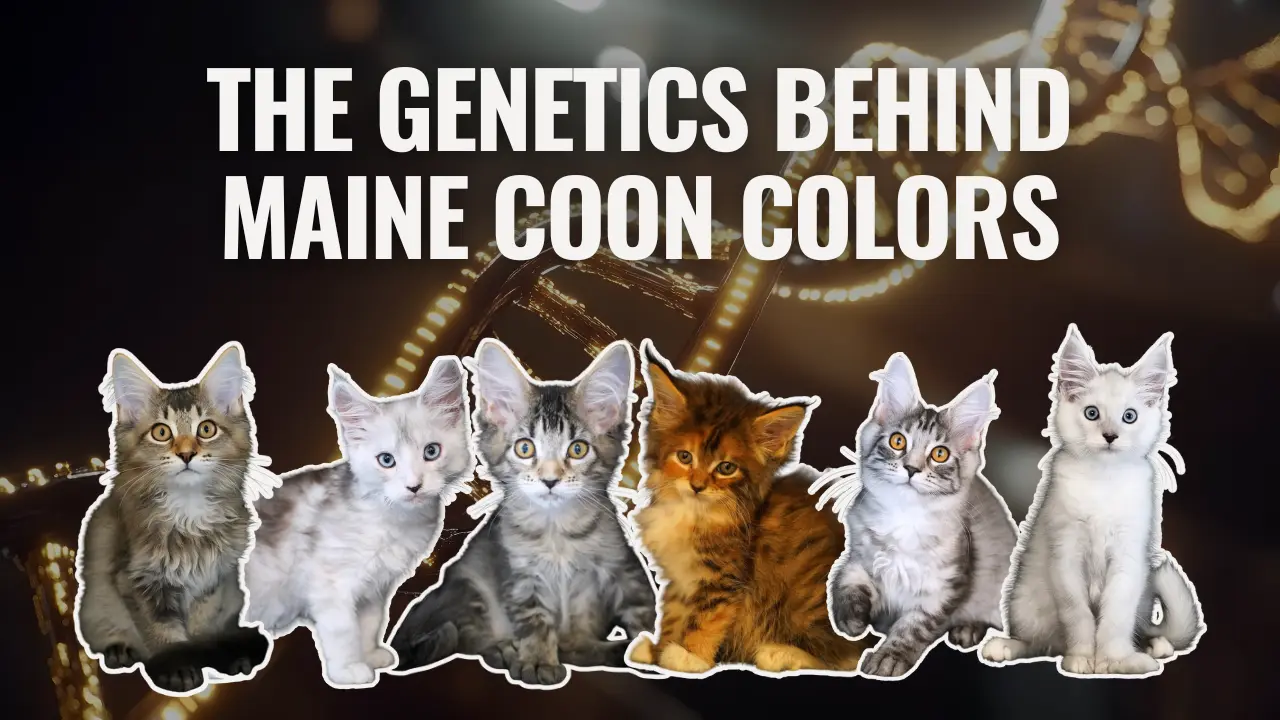
Genetic Guide to Maine Coon Coat Colors and Inheritance
From the moment a Maine Coon kitten is conceived, its distinctive coat palette—ranging from deep blacks to smoky silvers—is already encoded in its DNA. Understanding Maine Coon colors and the genetics behind them reveals how genes and alleles interact to determine pigments, patterns, and dilutions. This knowledge helps breeders work toward predictable outcomes and allows families to confidently choose kittens with the looks they love.
In this guide, you will explore:
- The basic principles of feline coat inheritance, including gene–allele relationships and pigment mechanisms
- Key modifier genes that create tabby markings, dilute shades and white spotting
- Sex-linked orange inheritance that makes tortoiseshell and calico coats almost exclusively female
- Common solid, tabby, smoke and silver varieties and their genetic underpinnings
- Methods for predicting kitten colours using Punnett squares and online calculators
- How colour genetics intersects with health screening, ethical breeding and pedigree standards
Whether you’re a breeder aiming for specific patterns or a loving home seeking a kitten with a stunning coat, these insights form the foundation for confident decisions—and if you’re ready to find your next companion, explore our Maine Coon Kittens for Sale at Bellspurr available in a range of genetically determined colours.
What Are the Basic Principles of Cat Coat Genetics?
Cat coat genetics defines how hereditary units called genes and their variant forms, known as alleles, combine to produce observable traits. These principles form the blueprint behind Maine Coon cat colors, determining every shade, pattern, and dilution seen in their fur. By understanding how these genetic elements interact, breeders can trace inheritance patterns, influence kitten outcomes, and better predict the coat characteristics of future litters.
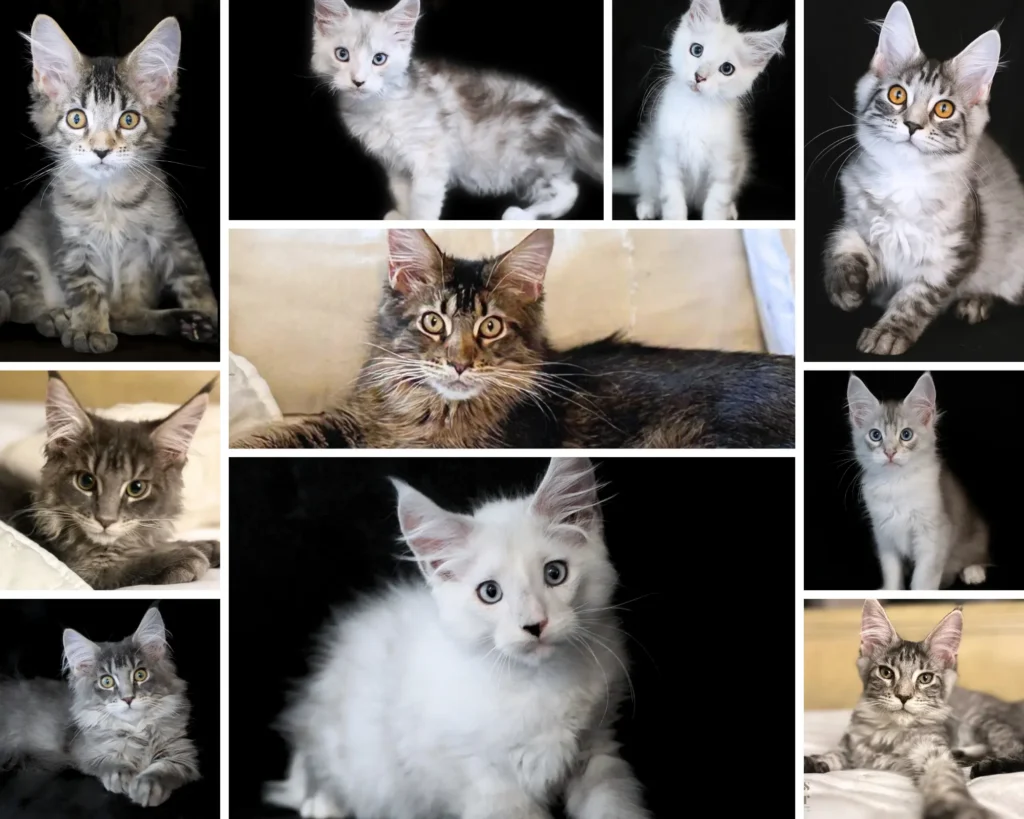
Which Genes and Alleles Control Maine Coon Coat Colours?
Genes carry instructions for pigment production and pattern formation, while alleles are alternate forms that modify gene expression. Each cat inherits two alleles for each gene—one from each parent—and dominant alleles typically mask recessive ones, shaping the coat phenotype.
How Do Dominant and Recessive Traits Affect Coat Colour?
Dominant traits require only one allele copy to manifest, whereas recessive traits need both alleles to be identical. For example, the dense (D) allele produces full pigment, overriding the dilute (d) allele unless two copies of d are inherited.
What Roles Do Phenotype and Genotype Play in Colour Expression?
Genotype refers to the genetic makeup of an individual’s alleles, while phenotype is the visible outcome, such as a blue-smoke coat. A cat’s phenotype is the result of its genotype interacting with modifier genes and pigment pathways.
How Do Pigments Like Eumelanin and Pheomelanin Influence Fur Colour?
Coat hue originates from two primary melanins: eumelanin for black and brown shades, and pheomelanin for red and yellow tones. Modifier genes regulate the synthesis and distribution of these pigments, producing the full spectrum of Maine Coon colours.
Below is a comparison of how each pigment operates at the molecular level:
| Pigment | Typical Colour Range | Mechanism |
|---|---|---|
| Eumelanin | Black, Brown, Seal | Polymerises to form dark melanin granules |
| Pheomelanin | Red, Cream, Orange | Synthesises sulphur-containing pigment units |
| Eumelanin + d | Blue, Lilac | Dilute allele redistributes pigment granules |
Developmental Genetics of Color Pattern Establishment in Cats
Research has identified key genetic mechanisms underlying feline coat color patterns. The DKK4 gene plays a central role in establishing stripe-like alterations in epidermal thickness during fetal development, which precede the visible fur patterns. Additionally, Endothelin 3 is involved in darkening hairs by increasing eumelanin production, influencing tabby markings.
This research directly supports the article’s explanation of how genes and pigments like eumelanin influence coat color and pattern formation, specifically mentioning the Agouti gene and pattern-specific modifiers.
This research directly supports the article’s explanation of how genes and pigments like eumelanin influence coat color and pattern formation, specifically mentioning the Agouti gene and pattern-specific modifiers.
How Do Specific Genes Modify Maine Coon Coat Colours and Patterns?
What Is the Agouti Gene and How Does It Create Tabby Patterns?
The Agouti gene (A) controls banding on individual hairs. When dominant, it produces agouti banding that outlines tabby stripes or spots; when recessive (a), hairs are uniformly pigmented, eliminating tabby distinction.
Before examining pattern variations, consider the major tabby types:
- Classic Tabby – Broad, swirling bullseye patterns on sides
- Mackerel Tabby – Narrow, parallel stripes resembling fishbone
- Ticked Tabby – Individual hairs banded without clear stripes
- Spotted Tabby – Broken stripes forming spots across the body
How Does the Dilute Gene Affect Colour Shades in Maine Coons?
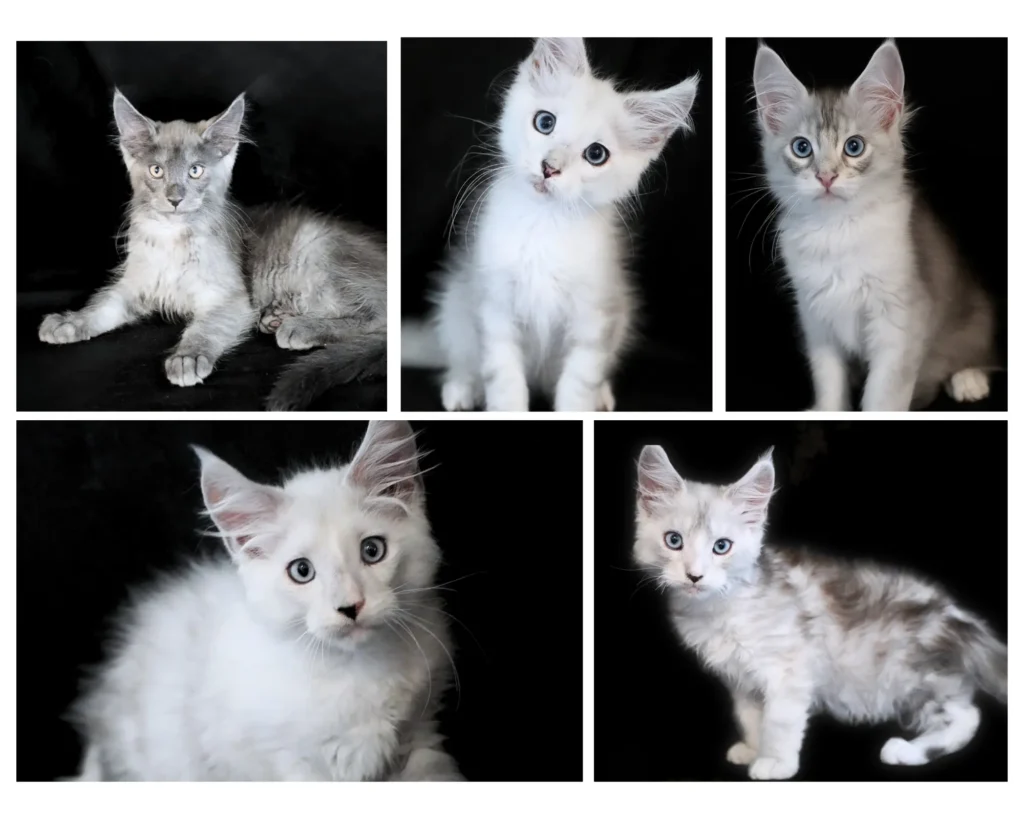
The dilute gene (d) is recessive and lightens basic pigments: black becomes blue (grey), red turns to cream. Kittens inherit dilute shading only if they receive two copies of the d allele.
Key dilution outcomes include:
- Blue – Diluted black; a cool grey shade
- Cream – Diluted red; a pale apricot tone
Dilution does not affect pattern visibility, so tabby markings remain pronounced against lighter backgrounds.
What Is the Role of the White Spotting Gene in Bicolour and Calico Patterns?
White spotting (S) introduces areas of unpigmented fur by inhibiting pigment cell migration during embryonic development. Variations range from minimal white patches (low-grade bicolour) to large blocks in tuxedo or calico distributions.
Spotting levels correlate with allele dosage:
- SS – Extensive white (>50%)
- Ss – Moderate white (10–50%)
- ss – Solid colour with no white
White spotting overlays underlying pigments and patterns, producing bicolour, harlequin and van-patterned Maine Coons.
Why Are Tortoiseshell and Calico Colours Almost Always Female in Maine Coons?
Tortoiseshell and calico patterns arise from sex-linked genetics, making these striking combinations predominantly female.
How Does the Orange Gene on the X Chromosome Influence Colour?
The orange gene (O) on the X chromosome switches eumelanin production to pheomelanin, turning black pigments orange. Females (XX) can carry one O and one non-O allele, expressing both colours, while males (XY) have only one allele.
What Causes the Unique Tortoiseshell and Calico Patterns?
Female cats with one O and one o allele display a mosaic of orange and black patches due to random X-chromosome inactivation in different skin regions. The addition of white spotting generates calico patterns with three colours: black, orange and white.
Are Male Tortoiseshell Maine Coons Possible and How Rare Are They?
Yes, male tortoiseshell cats occur in rare XXY individuals (Klinefelter syndrome). These cats may display tortoiseshell patterns but often have reduced fertility and require veterinary oversight. Their scarcity underlines the sex-linked nature of these coat types.
What Are the Common Maine Coon Coat Colours and Their Genetic Background?
Maine Coons exhibit a spectrum of solid, patterned and specialty coats, each with a distinct genetic signature.
Which Solid Colours Are Most Common in Maine Coons?
Solid-coloured cats express uniform pigment without Agouti banding or spotting. Common solid hues include:
- Black – Dense eumelanin, genotype D_ ss aa
- Red – Pheomelanin, genotype D_ oo aa
- Blue – Diluted black (dd ss aa)
- Cream – Diluted red (dd oo aa)
- White – White spotting overrides pigments (S_ aa dd optional)
What Are the Different Tabby Patterns and Their Genetic Causes?
Tabby designs result from Agouti and pattern-specific genes. The table below outlines each pattern:
| Tabby Type | Genetic Markers | Visual Characteristics |
|---|---|---|
| Classic Tabby | A_ McMc or Mcmc | Bullseye whorls on flanks |
| Mackerel Tabby | A_ M_ | Narrow, vertical stripes |
| Ticked Tabby | A_ Tt | Banding on individual hairs |
| Spotted Tabby | A_ McMc + Sp allele variant | Speckled or broken stripe patterns |
How Do Smoke, Shaded, and Silver Patterns Occur Genetically?
These speciality patterns emerge from inhibitor genes that suppress pigment on hair shafts:
- Smoke – Eumelanin packeted at shaft base, white tips (I i ii)
- Shaded – Light tipping with darker base (Inh Inh ii)
- Chinchilla/Silver – Almost complete inhibition of red or brown pigments, leaving white with slight tipping
Inhibitor alleles overlay existing colour and pattern genes, creating ethereal, luminous coats prized by breeders.
How Can Breeders Predict Maine Coon Kitten Colours?
Predicting kitten coat colours relies on Mendelian inheritance models such as Punnett squares and digital tools to calculate allele probabilities.
What Is a Punnett Square and How Is It Used in Colour Prediction?
A Punnett square is a grid illustrating parental allele combinations and offspring genotype probabilities. By placing one parent’s alleles along the top and the other’s down the side, breeders can visualise colour outcomes and estimate percentages.
Below is an example predicting dilute (d) inheritance between two carriers (Dd × Dd):
| Parent Allele | D (Dense) | d (Dilute) |
|---|---|---|
| D (Dense) | DD | Dd |
| d (Dilute) | Dd | dd |
This model shows a 25 % chance of a dilute kitten (dd), a 50 % chance of carriers, and a 25 % chance of non-dilute.
How Do Breeding Pairs Determine Kitten Coat Colours?
Combining knowledge of each parent’s genotype for Agouti, Dilute, Orange and White Spotting genes allows breeders to forecast patterns and shades. By mating two known carriers or clear individuals, one can select pairings that yield desired coat genetics with predictable ratios.
Are There Tools to Help Predict Maine Coon Kitten Colours?
Interactive online calculators and apps enable breeders to input parental colours and immediately view possible kitten phenotypes. For comprehensive supplies and breeding resources, our curated Bellspurr Amazon Shop offers guides, charts and kits that support accurate record-keeping and planning.
How Does Colour Genetics Relate to Maine Coon Genetic Health and Responsible Breeding?
Colour genetics meshes closely with health screening and ethical practices to maintain both aesthetic standards and feline wellbeing.
Which Genetic Diseases Are Important in Maine Coons?
Several inheritable conditions warrant attention:
- Hypertrophic Cardiomyopathy (HCM) – Thickening of the heart muscle
- Spinal Muscular Atrophy (SMA) – Motor neuron degeneration
- Hip Dysplasia – Malformation of hip joints
- Polycystic Kidney Disease (PKD) – Fluid-filled cysts in kidneys
Novel Genetic Variant Leads to Heart Disease in Maine Coon Cats
A study identified a mutation in the troponin-T (TNNT2) gene as a cause of hypertrophic cardiomyopathy (HCM) in Maine Coon cats. This finding highlights a specific genetic variant contributing to heart disease in the breed, which is a significant concern for breeders and owners.
This research provides specific scientific backing for the article’s discussion of Hypertrophic Cardiomyopathy (HCM) as an important inheritable condition in Maine Coons and the role of genetic screening.
This research provides specific scientific backing for the article’s discussion of Hypertrophic Cardiomyopathy (HCM) as an important inheritable condition in Maine Coons and the role of genetic screening.
Addressing these conditions safeguards kittens’ long-term health while preserving breed integrity.
How Does Genetic Screening Support Healthy Colour Breeding?
DNA tests identify carriers of HCM, SMA and other conditions before mating. By combining coat-colour planning with health panels—such as those recommended by TICA—breeders reduce disease prevalence while still achieving beautiful, genetically sound patterns.
Why Is Responsible Breeding Essential for Maintaining Colour and Health Integrity?
Responsible breeders adhere to standards that balance colour goals with wellness. By selecting for both desired alleles and clear genetic health statuses, they reinforce pedigree quality, minimise hereditary disease and uphold the Maine Coon’s reputation for robust constitution and striking coats.
Common Inquiries About Maine Coon Colour Genetics
Prospective owners and breeders frequently seek clarity on inheritance mechanisms, pattern predictions and sex-linked variations. Typical areas of interest include how base pigments combine with modifiers, the influence of dominant versus recessive alleles, sex-chromosome effects on tortoiseshell patterns and tools for forecasting litter outcomes. By mastering these fundamentals, families and catteries align expectations and celebrate each kitten’s unique genetic heritage.
Maine Coon colour genetics illuminates how pigments, pattern genes and modifiers craft each kitten’s coat. Armed with Punnett squares, digital calculators and rigorous health screening through TICA standards, breeders can confidently plan litters that balance beauty with wellbeing. For those ready to welcome a healthy, pedigreed companion, explore our selection of purebred kittens—expertly bred for colour, temperament and longevity—on the Bellspurr Maine Coon website or watch our breeding process and colour showcases on the Bellspurr Maine Coons YouTube channel. With transparent practices and deep genetic insight, Bellspurr ensures every Maine Coon finds a loving home with the coat of your dreams.